The landing
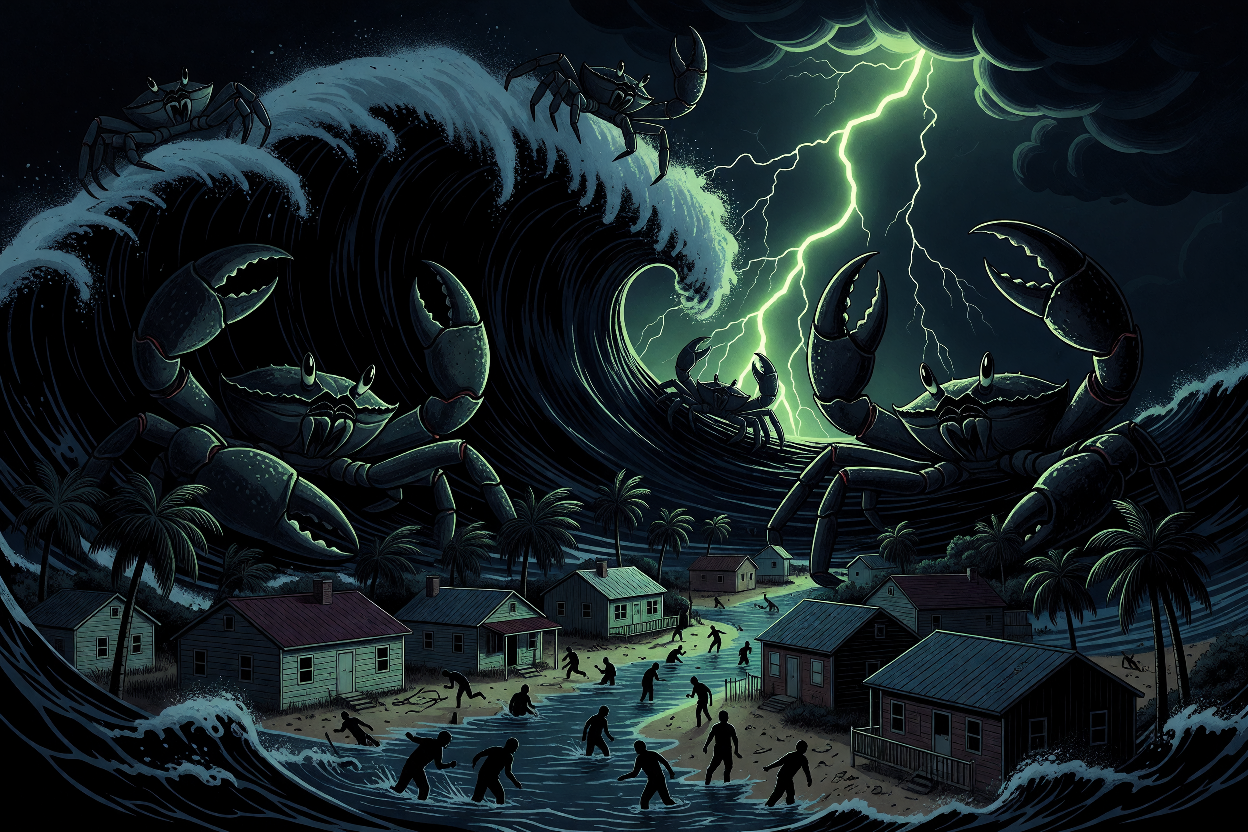
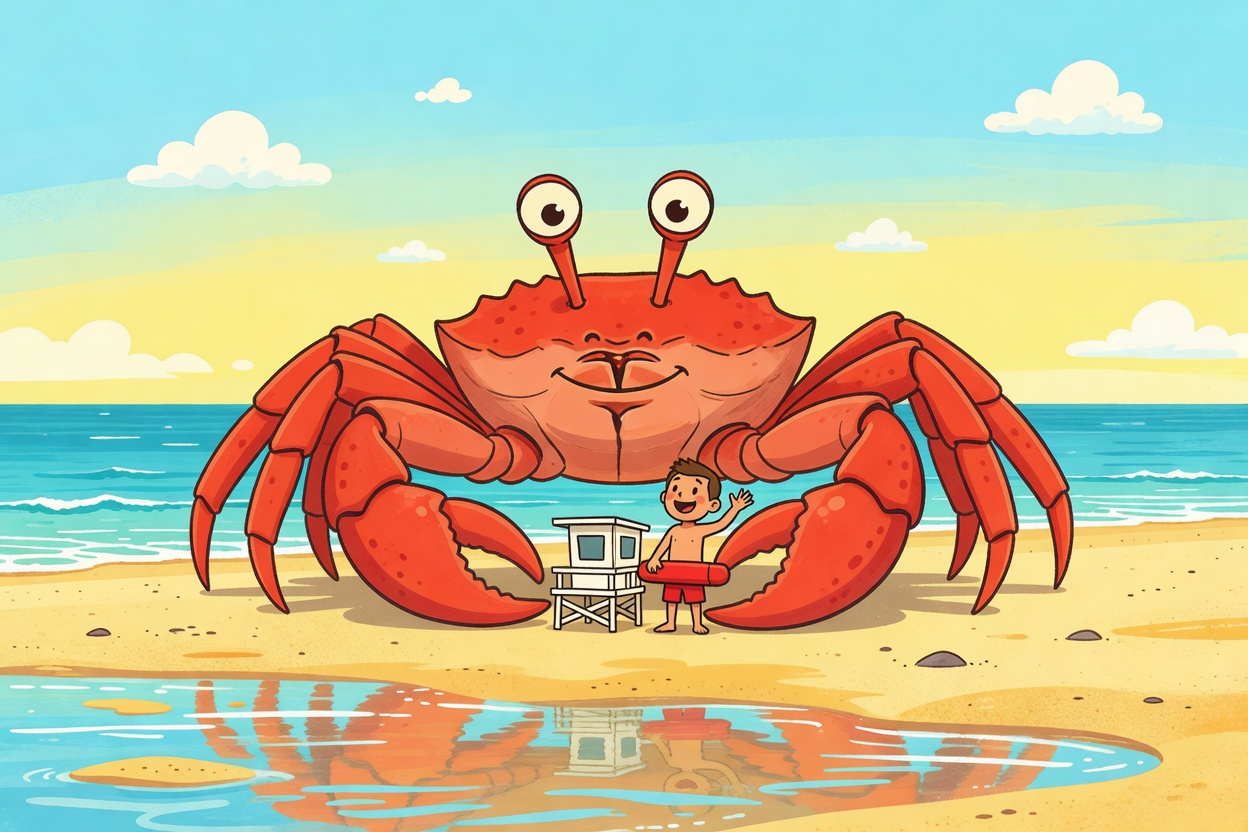
They rose out of the Gulf at low tide, each one the size of a pickup truck, and politely asked to speak to the manager of the beach.
Shell shock
Large, sentient, and extremely organized. The Sunshine State is now a claw-run territory.
How it happened
They rose out of the Gulf at low tide, each one the size of a pickup truck, and politely asked to speak to the manager of the beach.
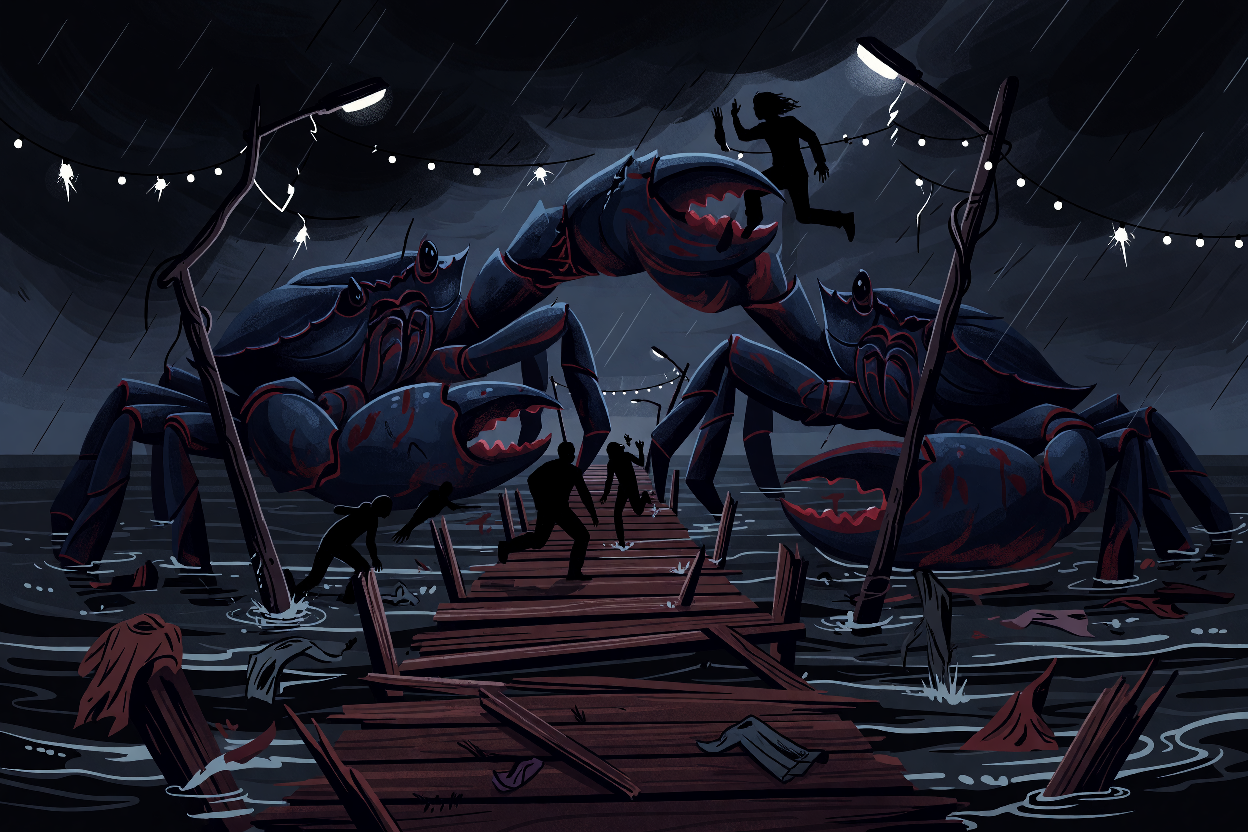
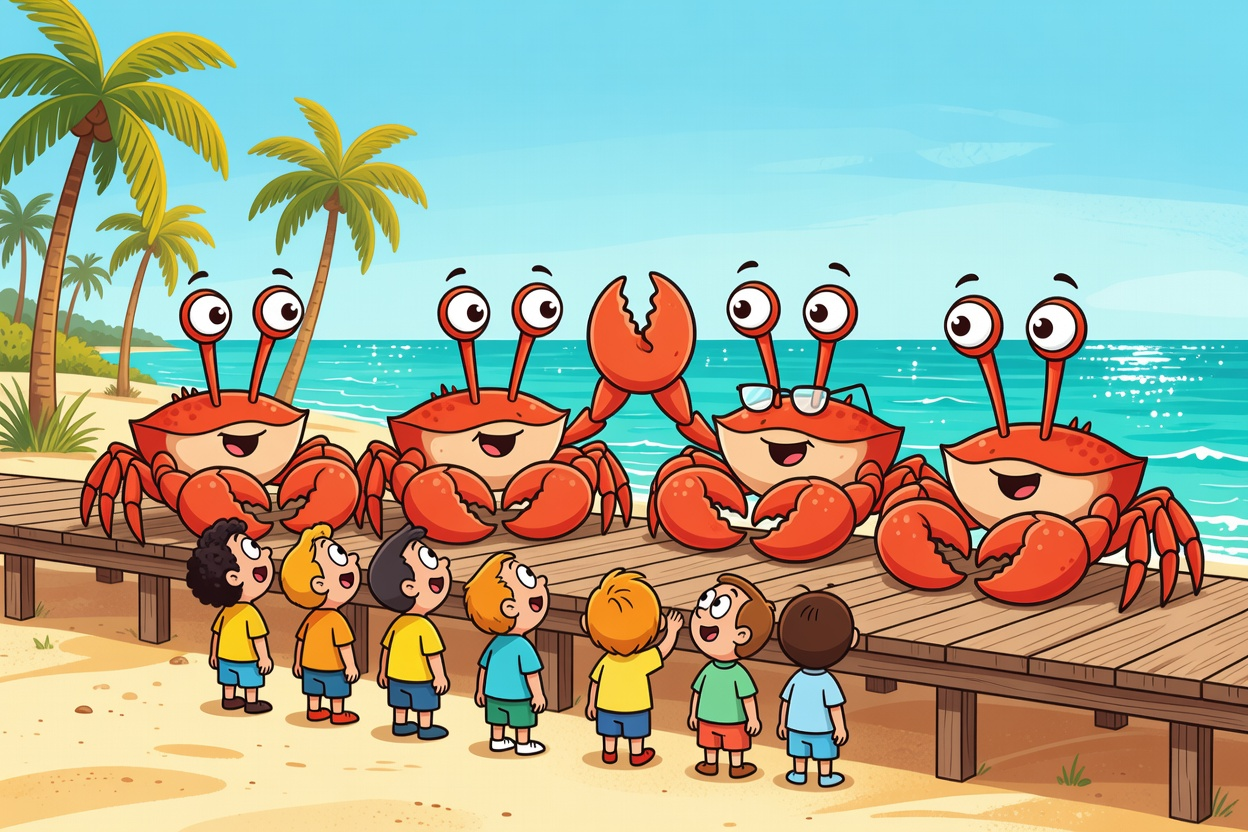
By morning the crabs had seized every boardwalk, formed a governing council, and declared sideways the only legal direction of travel.
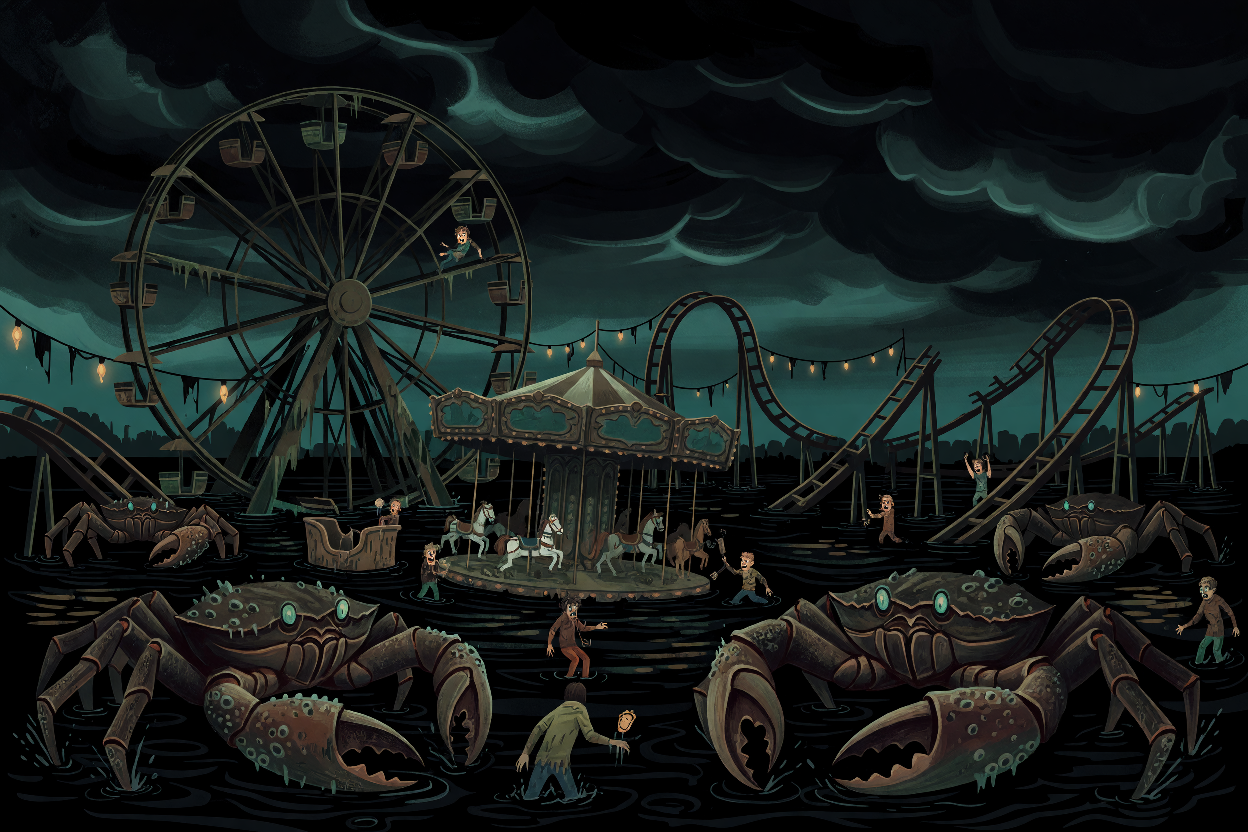
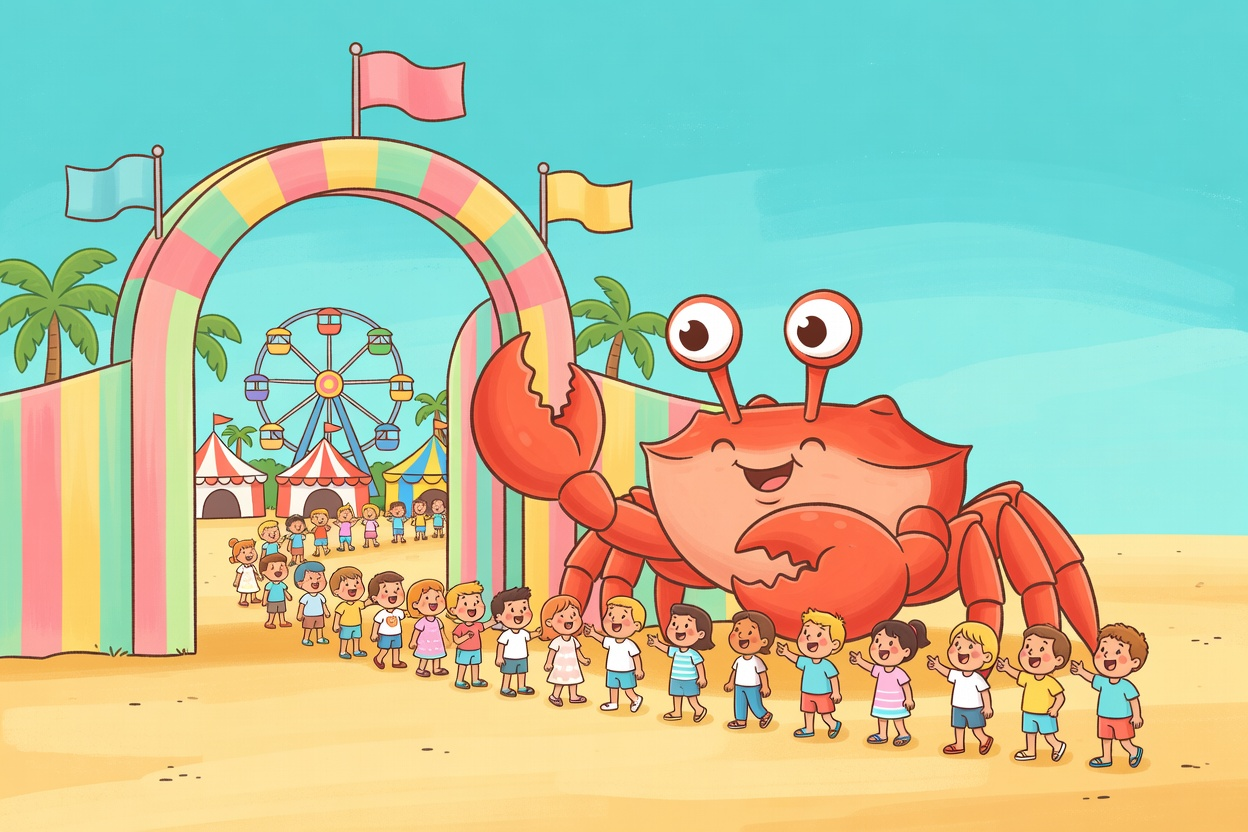
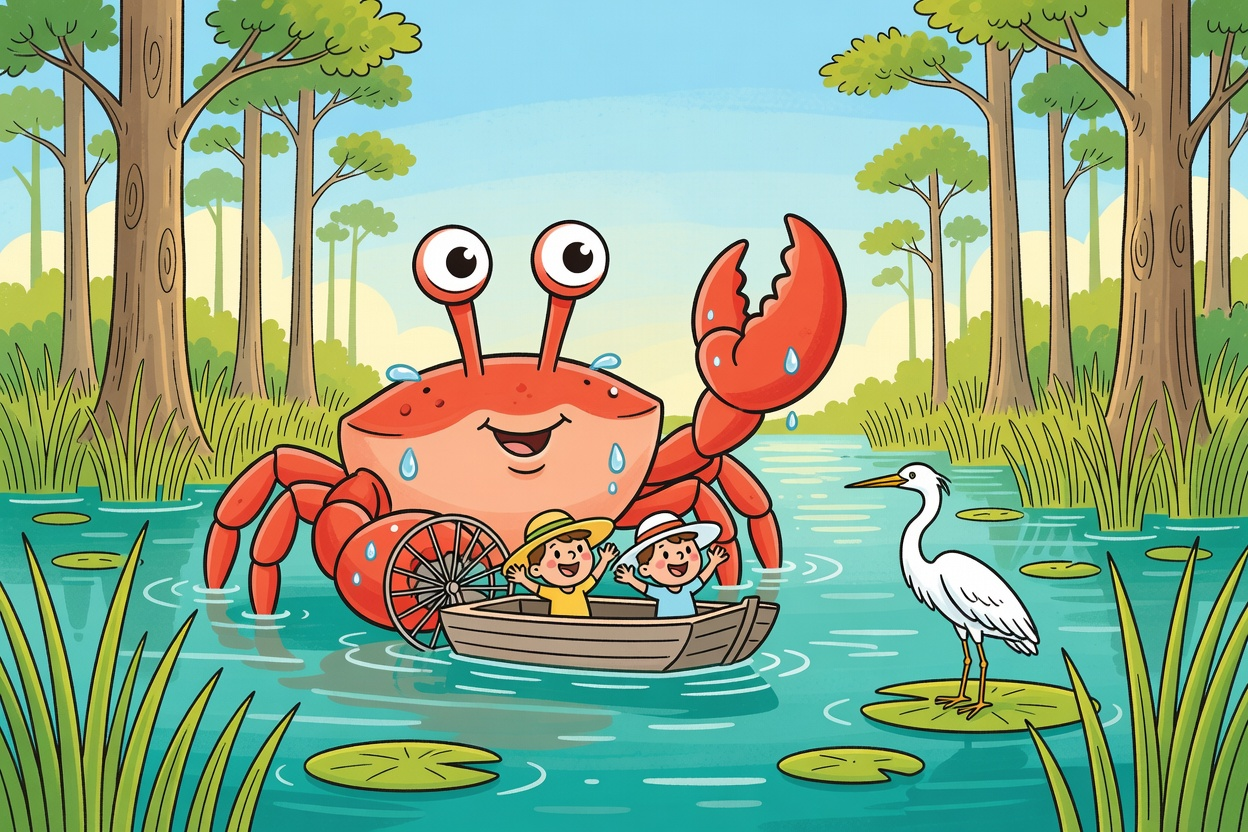
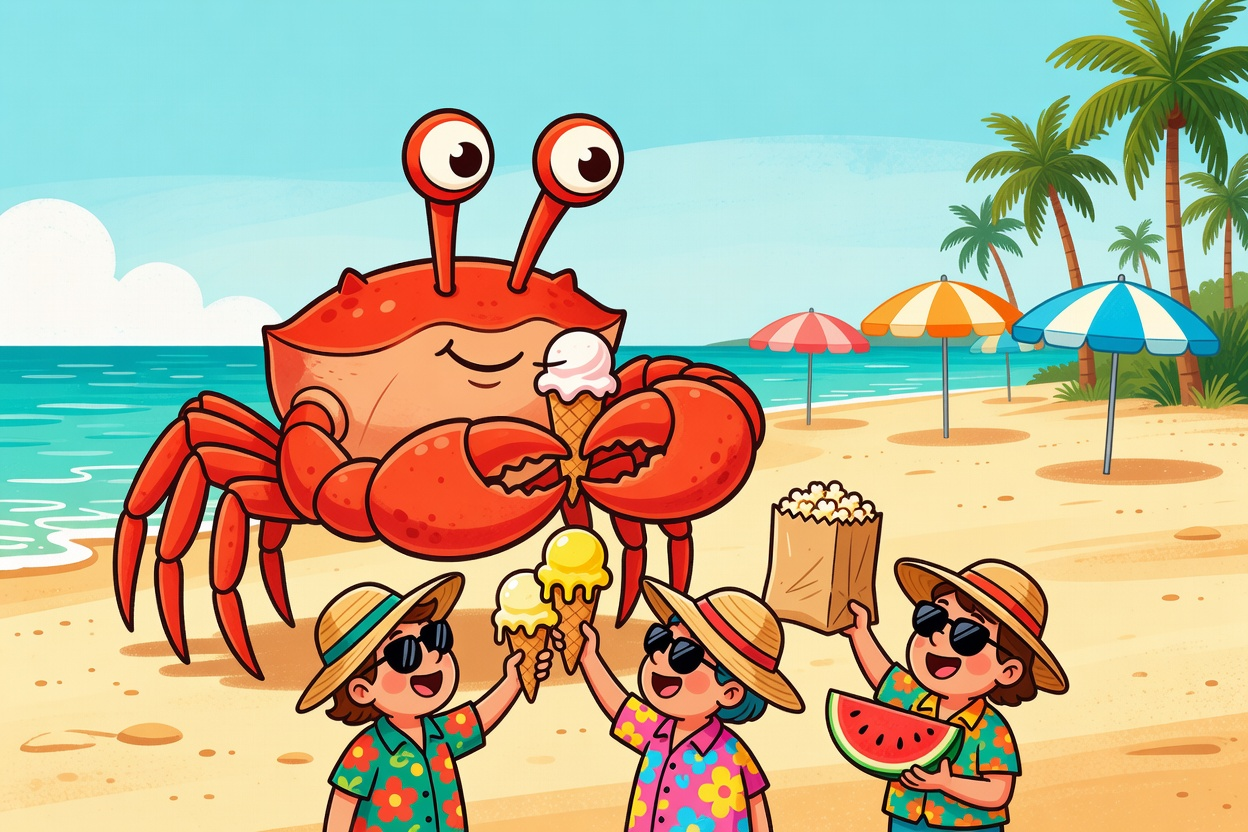
Theme parks now run on shell time, the swamps belong to the molting class, and tourists are welcome so long as they bring snacks.
Takeover sightings
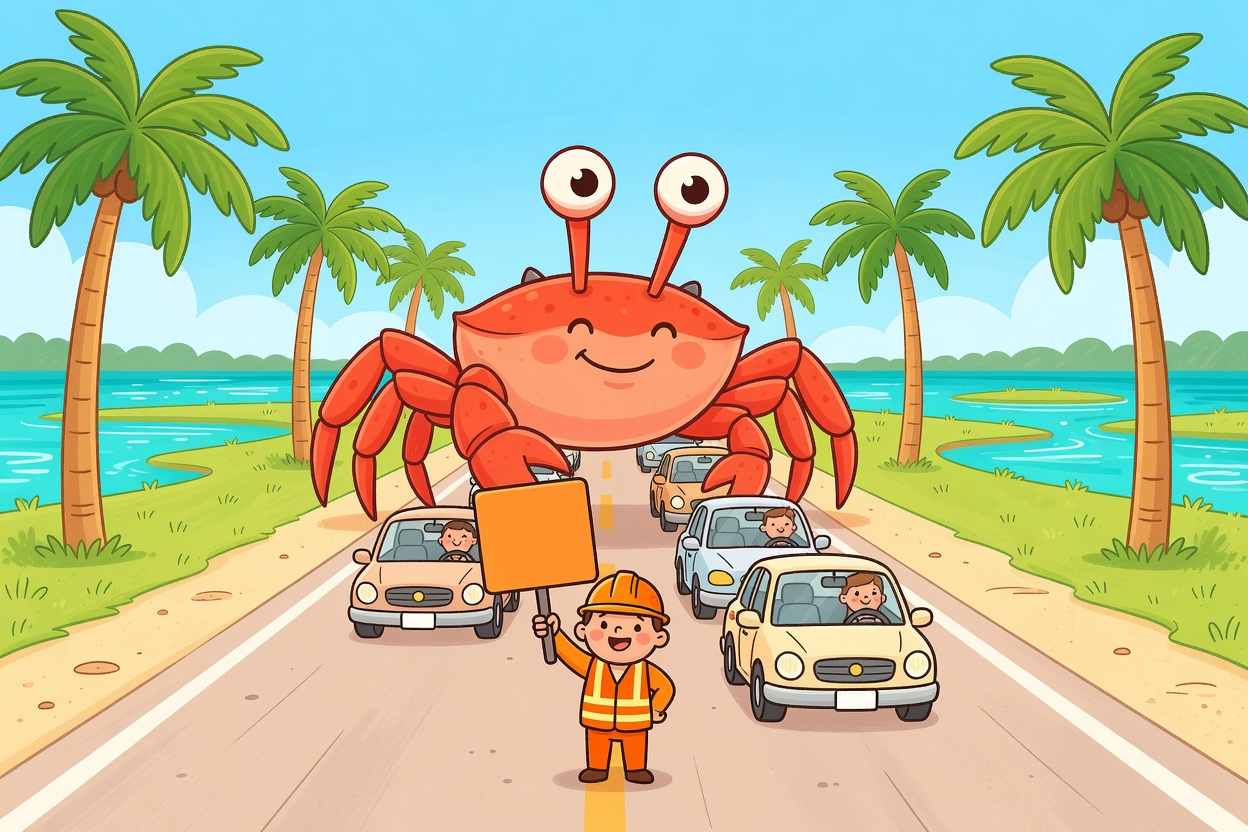
These are imagined illustrations from the takeover story, not photos, because no real crab's body is larger than a person.
True crab facts
The Florida takeover above is make-believe. Every fact below comes from the decidedly strange real world.
The Japanese spider crab has the longest legs of any crab: the largest specimen listed by Guinness spanned about 3.7 m (12 ft), roughly twice the height of an adult human, and weighed 18.6 kg (41 lb).
Source for this crab factJapanese spider crabs may live up to 100 years.
Source for this crab factThe coconut crab is the largest crustacean living on land, reaching about 40 cm long, about 0.9 m from leg tip to leg tip, and about 4.1 kg (9 lb). It is a shell-less relative of hermit crabs, not a true crab.
Source for this crab factThe strongest measured pinch among 29 wild coconut crabs was 1,765.2 newtons. Scientists estimate that a 4 kg coconut crab could pinch with about 3,300 newtons; that larger figure is an estimate, not a measurement, and coconut crabs are not true crabs.
Source for this crab factThe Tasmanian giant crab can reach 17.6 kg (39 lb), with a shell up to 46 cm (18 in) wide. Males grow to more than twice the size of females, which do not exceed 7 kg.
Source for this crab factCrabs can shuffle forward slowly, but their simple hinge-like leg joints and wide, flat bodies make sideways travel much faster.
Source for this crab factAdult female Tasmanian giant crabs molt only about once every nine years. Because they can mate only just after molting, this limits how often they breed.
Source for this crab factA stone crab can deliberately drop a damaged leg or claw and regrow it. The replacement starts smaller and takes about three molts to regain most of its size.
Source for this crab factCrustaceans can have blue blood because they carry oxygen with hemocyanin, a copper-containing protein that is colourless until it binds oxygen and turns blue.
Source for this crab factAdult coconut crabs breathe air with special branchiostegal lungs and can drown if kept underwater. Coconut crabs are not true crabs.
Source for this crab factCoconut crabs have a keen sense of smell for finding food, and their smell organs evolved to resemble those of insects. They are not true crabs.
Source for this crab factTens of millions of red crabs march from forest to coast on Christmas Island after the first wet-season rain. Each female can release up to 100,000 eggs into the sea.
Source for this crab factDecorator crabs fasten algae, sponges, and anemones to hooked bristles that work a little like Velcro. After molting, they move favourite decorations to the new shell.
Source for this crab factBoxer crabs hold a sea anemone in each claw. If one is lost, a crab can split the remaining anemone in two, and both pieces regrow into identical clones.
Source for this crab factMale fiddler crabs have one large and one small claw, while females have equal-sized claws. A male waves his large claw beside his burrow to attract a female.
Source for this crab factHermit crabs in Belize have formed groups of up to 20 around a shell that was too large, lined up from largest to smallest, and swapped shells in rapid sequence. Hermit crabs are not true crabs.
Source for this crab factEvolution has produced the crab body shape at least five separate times in true crabs and crab-like relatives. This repeated trend is called carcinization.
Source for this crab factEvolution can also lose the crab body plan, a process called decarcinization. King crabs look like crabs but are false crabs, not true crabs.
Source for this crab factThe yeti crab Kiwa puravida farms bacteria on its hairy arms as its main food, waving its claws in a way that may help the bacteria grow before harvesting them with its mouthparts. Yeti crabs are not true crabs.
Source for this crab factThe smallest crabs are parasitic pea crabs, some measuring no more than 6.3 mm across. They live inside molluscs such as oysters and mussels.
Source for this crab factField notes
Crabs bring strong claws, excellent hats, and the quiet confidence to scuttle wherever the day takes them.
Today's crab wisdom: when forward feels overrated, sideways still counts.
The darker side
Fictional horror: this separate timeline contains graphic violence and the end of the world.
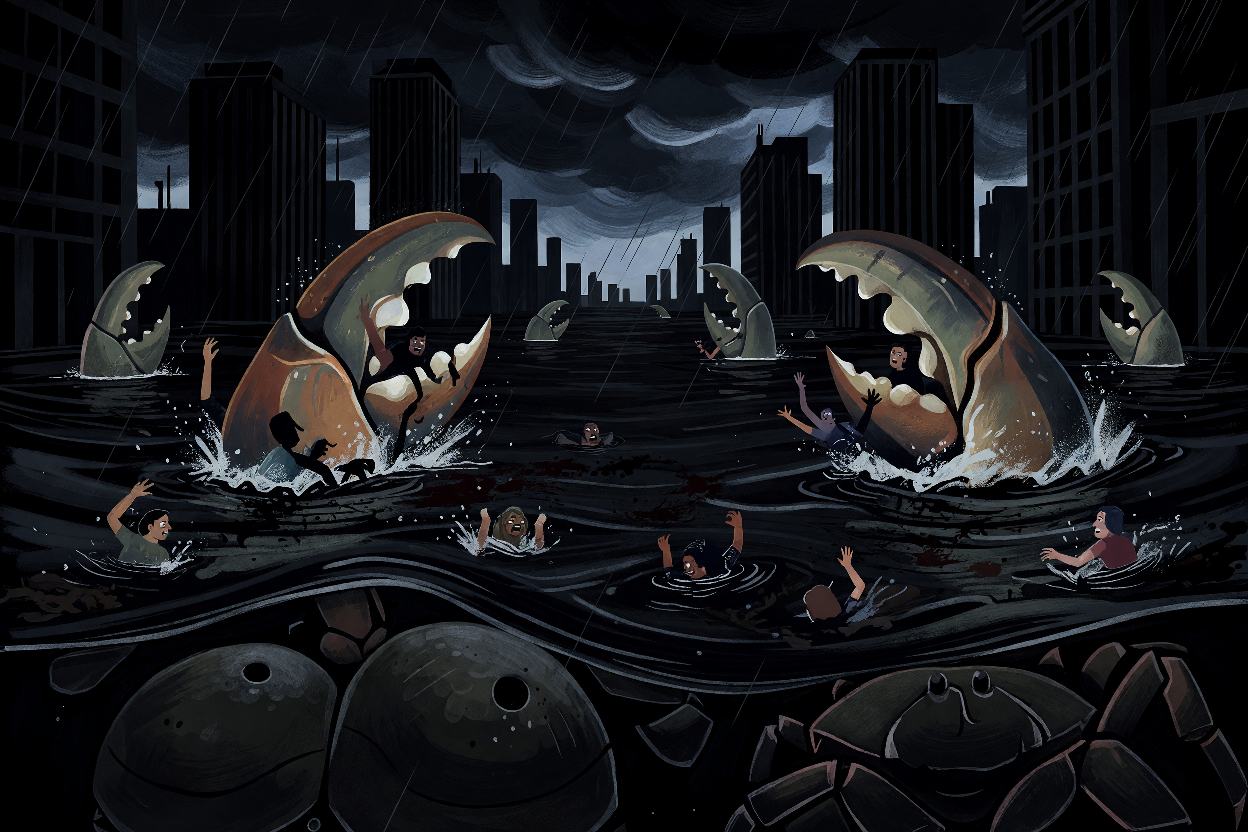
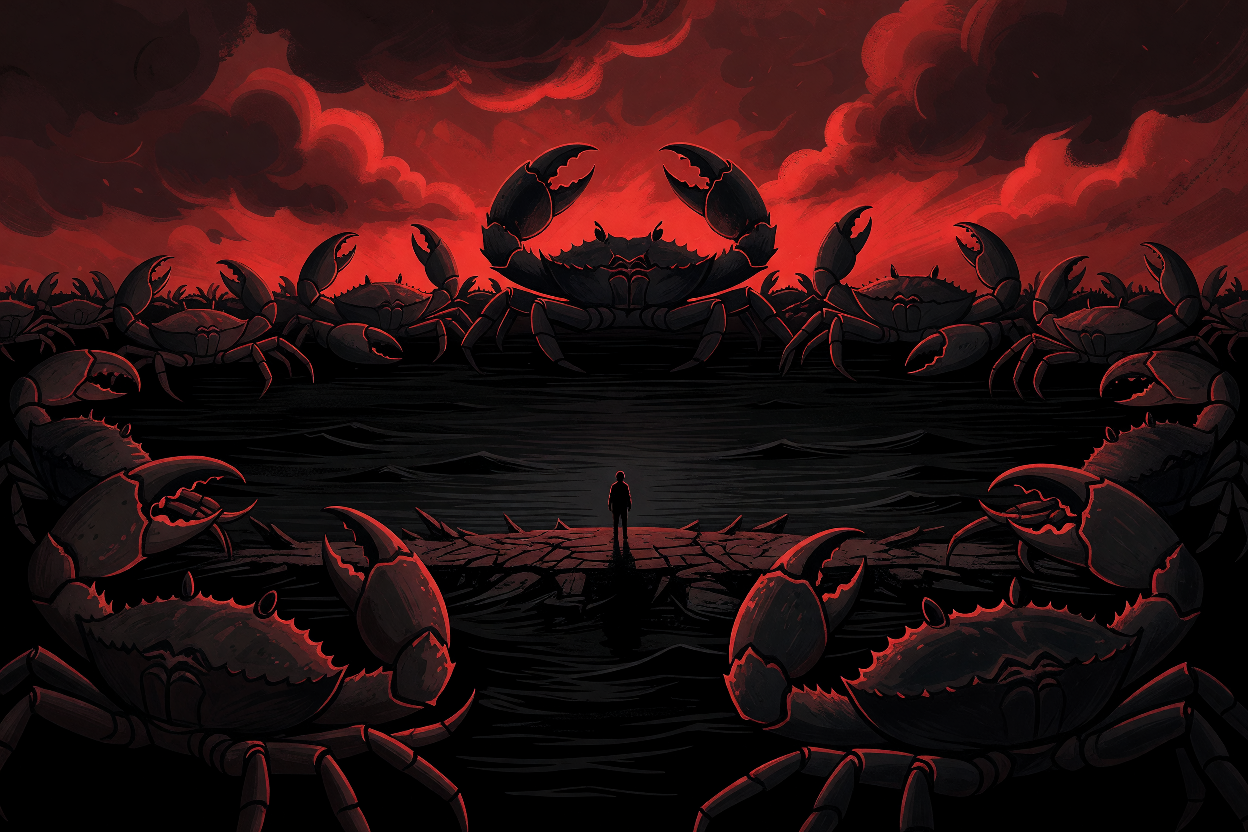
The high tide arrived beneath a moonless sky and kept climbing after every clock said it should turn. Shapes moved under the black water, first by the hundreds and then beyond counting. When the first crabs hauled themselves onto the seawall, they were taller than the streetlights, armored in weed and rust, and they did not ask for the manager. Behind them, the ocean continued inland.
By dawn, the avenues had become channels. The crabs tore people apart wherever crowds jammed against locked doors, their claws striking with the sound of trees splitting in a storm. Sirens vanished beneath the scraping of shells against concrete. Those who escaped the first assault watched the water carry away every place where safety had once seemed certain.
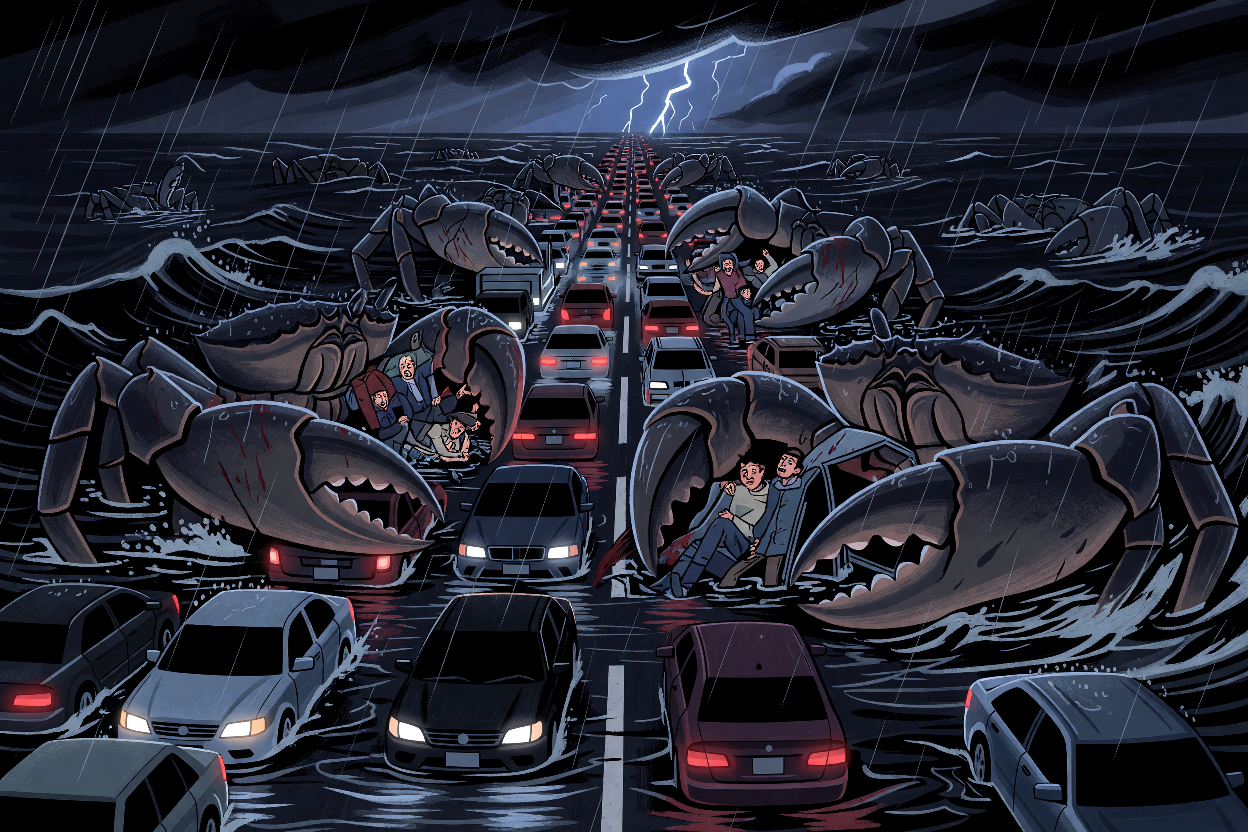
The last evacuation convoy turned toward higher ground, but every road ended in the same advancing tide. Engines drowned. Rescue boats found the current running backward, drawing them toward a moving wall of claws. Radio voices counted shelters going silent until only static remained, and the survivors understood that there was nowhere left to flee.
The high tide never went out. It crossed mountains, swallowed the final lights, and left the world ending in a high tide mess of broken towers, drifting roofs, and red shells moving beneath the waves. At the end there was no shore, no morning traffic, no dry land at all—only a dark ocean circling the planet and the slow percussion of claws below.
These are imagined illustrations from the dark story, not photos.